
How to Fix Brown Patches in Your Lawn?
Brown patches in your lawn can feel frustrating.
One week your grass looks green and healthy. The next week, you start seeing dry, uneven spots spreading across your yard. In Lubbock, this happens more often because of heat, wind, and dry soil.
The good news is this:
Most brown patches can be fixed with simple steps, once you understand the real cause.
Why Does Brown Patches Happen in Lubbock Lawns?
Different problems create brown patches. Common causes in our area include:
- Heat stress during long dry days
- Uneven watering or sprinkler issues
- Lawn fungus after rain or heavy dew
- Compacted soil that blocks nutrients
- Pests like grubs or insects damaging roots
- Mowing too short, weakening the grass
Find the real cause first. The fix depends on it.
Step 1: Check Watering Habits
Watering mistakes are the #1 reason for brown patches in Lubbock.
Look for:
- Dry, crispy grass that breaks easily
Hard, dusty soil - Uneven color across the lawn
Fix it:
- Water deeply 2–3 times per week (about 1 inch total)
- Water early morning so leaves dry before night
- Check sprinkler heads for clogs or poor aim
- Deep watering builds strong roots that handle our heat better.
Step 2: Raise Your Mowing Height
Cutting too short is a big mistake in West Texas.
Short grass burns faster and can’t shade the soil.
Do this:
- Keep Bermuda grass at 1.5–2 inches
- Follow the ⅓ rule — never cut more than one-third of the blade
- Use sharp blades for clean cuts
Taller grass stays cooler and stronger.
Step 3: Look for Lawn Disease
Fungus (brown patch disease) spreads after warm, humid weather.
Signs:
- Circular patches with darker edges
- Thin, weak grass
- Spots that slowly grow bigger
Fix it:
- Stop watering at night
- Improve airflow (thin thick areas if needed)
- Apply fungicide made for lawns if the patch is large
Early action stops it fast.
Step 4: Check for Pests or Root Damage
If grass lifts like a rug, roots are likely damaged.
Grubs and insects eat roots and leave dead spots.
Quick test:
- Pull a small patch — easy lift means pests
- Dig a bit — look for white, C-shaped grubs
Solution:
- Apply grub control in summer (preventive) or fall (curative)
- Water it in well
Thick, healthy grass resists pests naturally.
Step 5: Improve Soil Health
Lubbock soil is often dry and hard. That blocks water and food from reaching roots.
Help it:
- Aerate once a year (spring or fall)
- Add compost or topdressing
- Use balanced fertilizer for Bermuda grass
Better soil = stronger lawn = fewer brown patches.
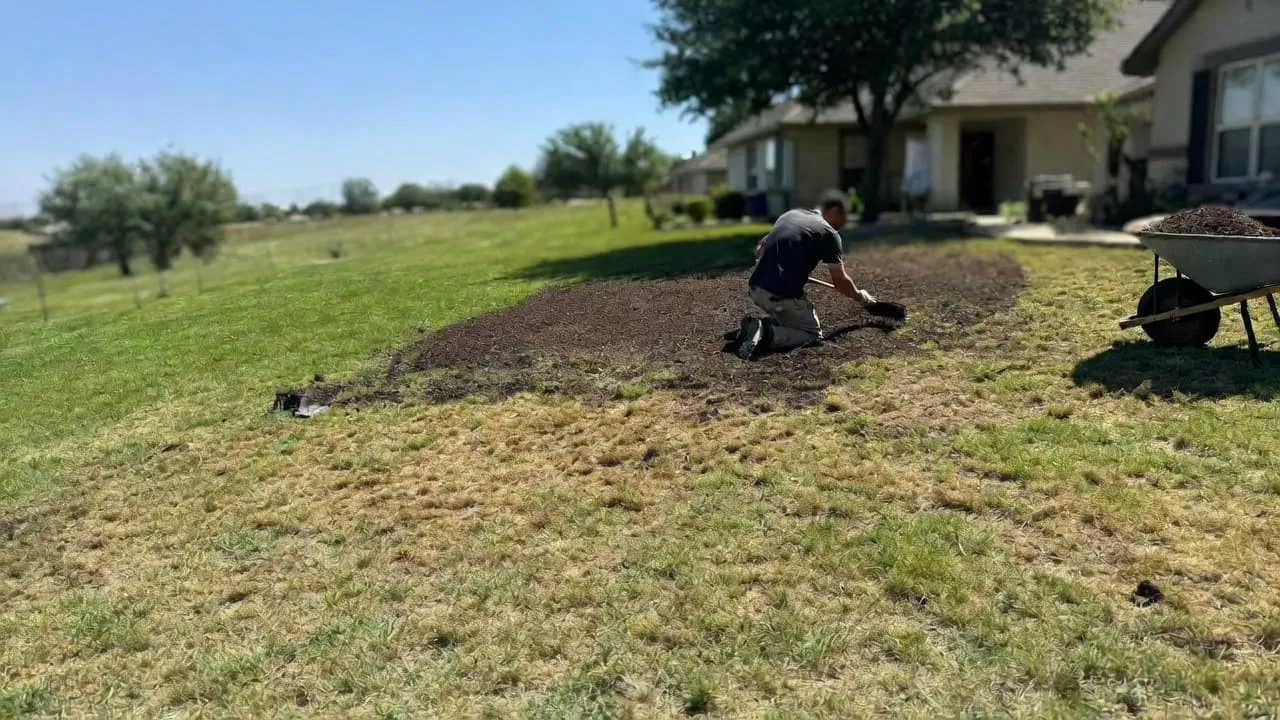
Step 6: Repair the Damaged Spots
After fixing the cause, repair the bare areas.
Options:
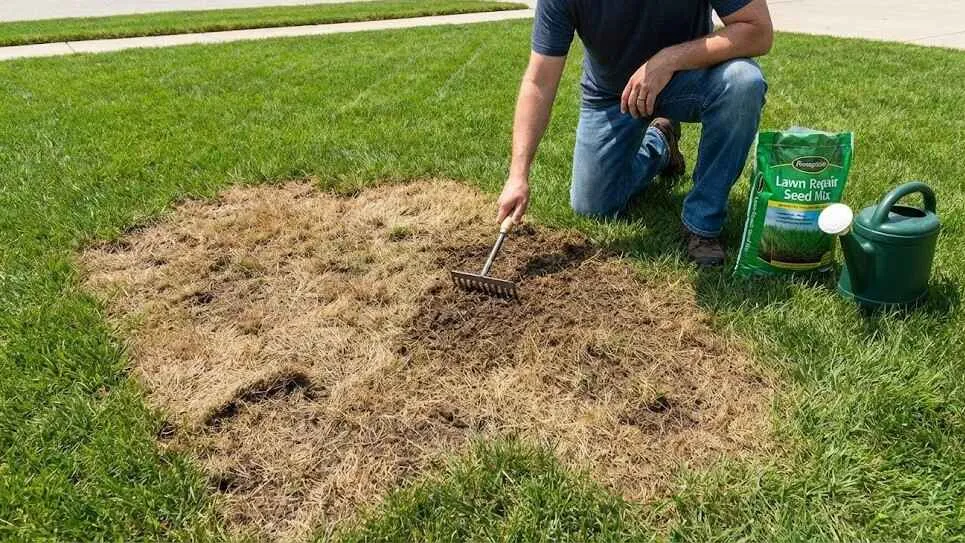
- Rake out dead grass
- Add topsoil or compost
- Spread Bermuda seed (late spring) or lay fresh sod
- Keep it moist until new grass roots
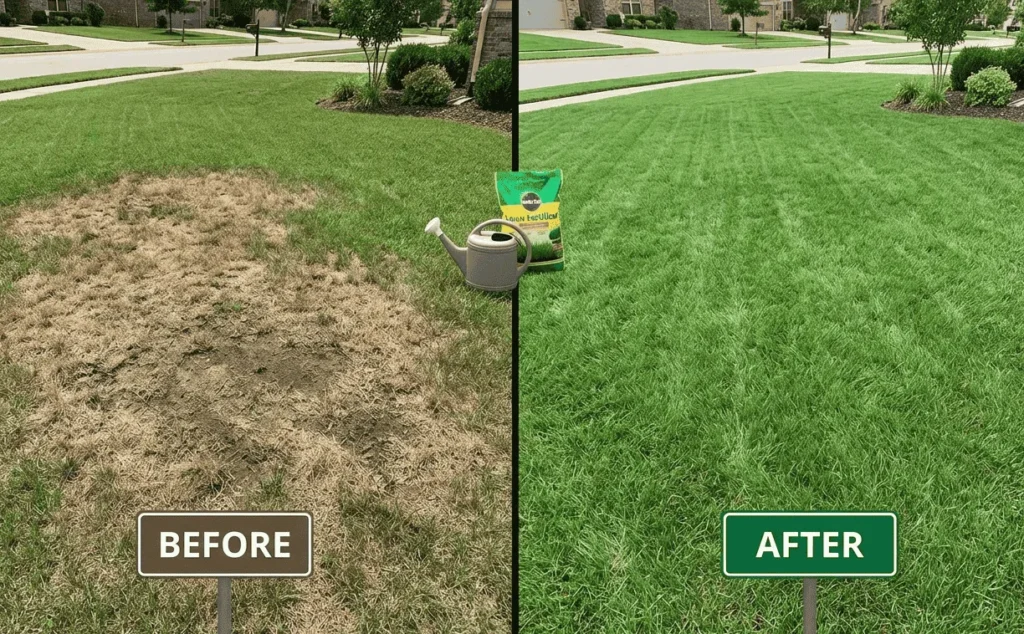
Small patches fill in within 2–4 weeks.
How Long Does Recovery Take?
Small patches: 2–3 weeks
Larger areas: 4–6 weeks
Full lawn: depends on season and care
Stay consistent. Steady care beats fast fixes.
Need Help Fixing Your Lawn?
At Ace Landscaping Lubbock, we help homeowners fix brown patches and bring their lawns back to life.
We understand Lubbock’s soil, weather, and turf conditions. Our lawn care services focus on practical solutions that keep your yard green, healthy, and easy to maintain.
If your lawn is struggling, we’re here to help.