Lawn Care Services in Lubbock – Scheduled Around West Texas Grass and Seasons
A healthy lawn doesn’t happen by accident. It takes the right schedule, the right treatments, and the right timing for each season.
Skipping weeks or using the wrong products in this climate sets Bermuda grass back faster than it recovers.
We build lawn care programs around Lubbock’s specific grass types, caliche soil conditions, and seasonal growth windows.
What Lawn Care in Lubbock Actually Requires
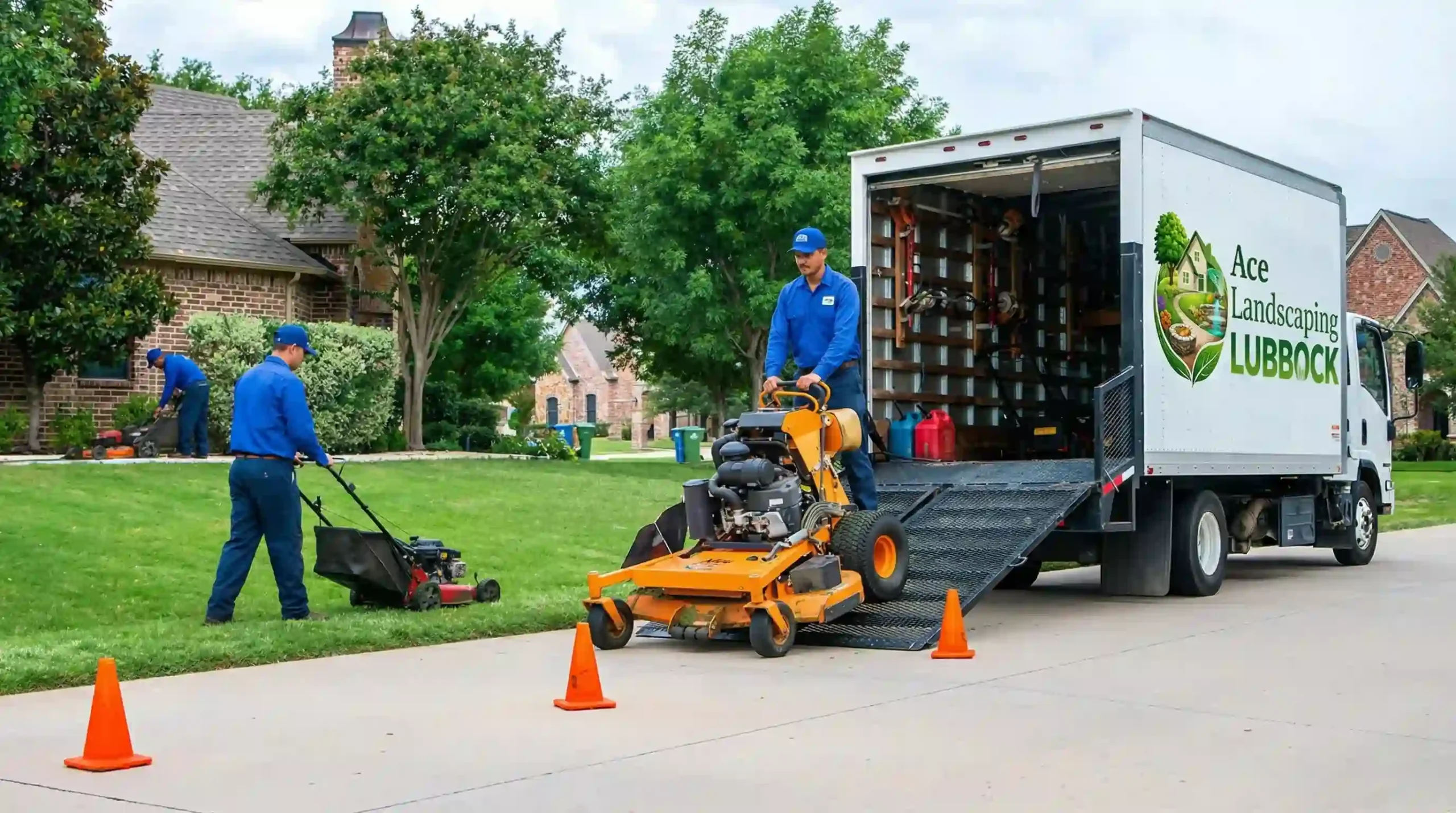
Ace Landscaping provides recurring and one-time lawn care for residential and commercial properties across Lubbock and the surrounding South Plains. Lubbock’s Bermuda-dominant lawns, alkaline caliche soil, and seasonal wind patterns require a specific approach, not a standard program built for milder climates. We design schedules around what your yard actually needs at each point in the year.
Our approach stays practical. Consistent, correctly-timed care is what separates a lawn that holds together through a Lubbock summer from one that patches out by July.
Most Lubbock lawns are Bermuda grass. It is a warm-season turf that grows fast in heat but goes fully dormant in winter. That growth cycle dictates when to mow, when to fertilize, when to aerate, and when to apply pre-emergent treatments. Apply nitrogen too early in spring and it feeds weeds rather than grass. Wait too long in fall and you miss the window to strengthen roots before dormancy. Timing these treatments correctly for Lubbock’s specific climate is where most general lawn care programs fall short.
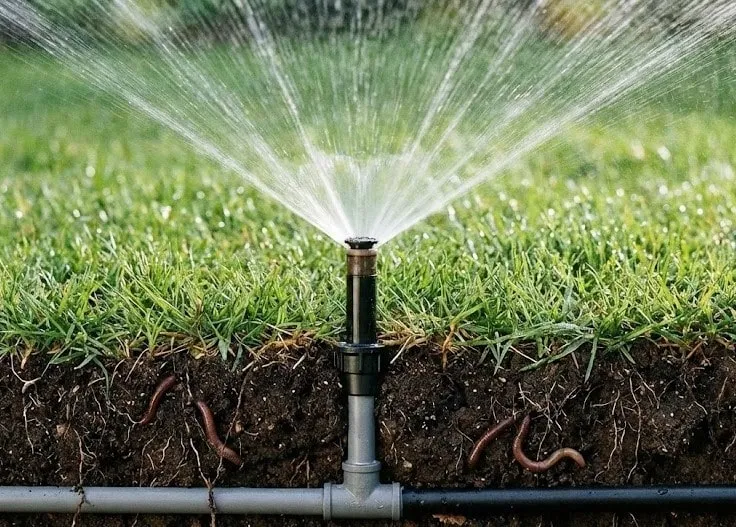
Irrigation scheduling is directly tied to how well lawn care treatments perform. A lawn receiving water at the wrong time of day or in the wrong volume will stress faster regardless of how good the mowing and fertilization program is. If your irrigation system is not calibrated correctly or needs repair, our irrigation services team can assess it as a separate visit or alongside a lawn care appointment.
Caliche soil also affects how treatments penetrate. Water, fertilizer, and weed control products that pool above the hardpan rather than absorbing into the root zone deliver weaker results. Properties with visible pooling after irrigation or rain often have a drainage issue underlying the lawn problem. Our yard drainage team can assess whether drainage correction would improve the effectiveness of the lawn care program.
Our lawn care includes regular mowing at the ideal height for Lubbock grasses, sharp edging along driveways and walkways, and thorough cleanup after every visit.
We handle the full scope: mowing on the correct schedule for each season, weed control using pre- and post-emergent treatments timed to Lubbock’s weed calendar, fertilization matched to Bermuda’s growth cycle, aeration to open compacted caliche soil, and pest and disease management specific to West Texas conditions. Residential homeowners, rental property owners, and commercial properties can all set up recurring plans.
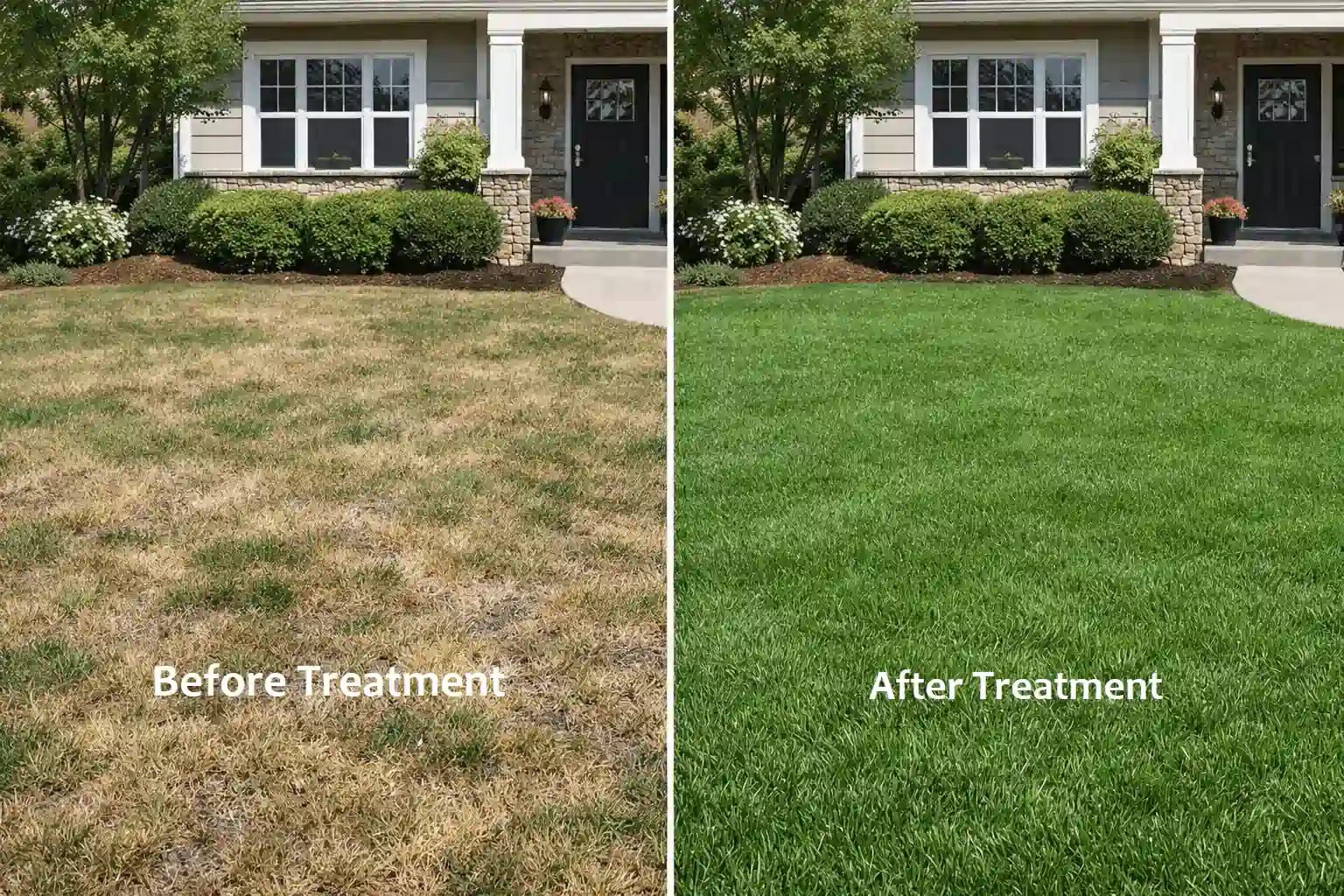
We schedule recurring services so you do not track it yourself. One call sets up the program, and we show up on time. The result is a lawn that stays green through the growing season, holds up through Lubbock heat without constant attention, and comes back strong each spring.
Lawn Care Services We Provide in Lubbock, TX
Ace Landscaping keeps Lubbock lawns thick, green, and consistently healthy throughout the growing season. Every service starts with a walkthrough of your yard and a direct conversation about what the lawn actually needs. From there, we build a schedule that fits your property and budget.
Your lawn should hold up to Lubbock’s heat, wind, and weeds without demanding your weekends. We build care programs for homeowners and businesses that match how this climate actually works — the right schedule saves both your time and your water bill. For mowing-specific information including height recommendations by grass type and season, see our lawn mowing guide for Lubbock. To get started with a full lawn care plan, contact us and we will set up an on-site walkthrough.
From roots to blades, our full-service lawn care handles these essential aspects of your yard:
Mowing & Basic Maintenance
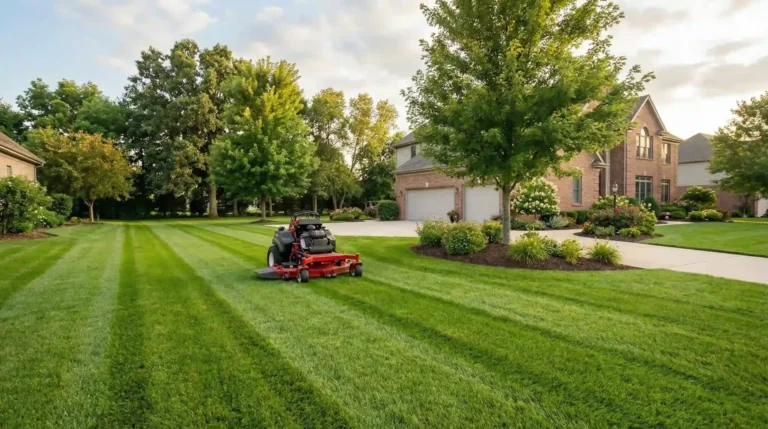
Bermuda grass in Lubbock needs mowing at 1.5 to 2 inches during the growing season and no shorter. Cutting below that height exposes soil directly to heat, accelerates moisture loss, and weakens roots before summer peaks. During the fastest growth window from May through August, Bermuda needs cutting every 5 to 7 days. We match the mowing interval to actual grass growth, not a fixed calendar, so the yard stays even rather than alternating between overgrown and scalped.
Each visit includes sharp blade edging along sidewalks, driveways, and flower beds for clean, consistent borders. We clear clippings off hard surfaces and collect debris before leaving. During each mow we also check for visible problems: brown patches, thinning areas, early pest activity, or irrigation coverage gaps. These get flagged before small issues develop into more expensive repairs.
Weed Control
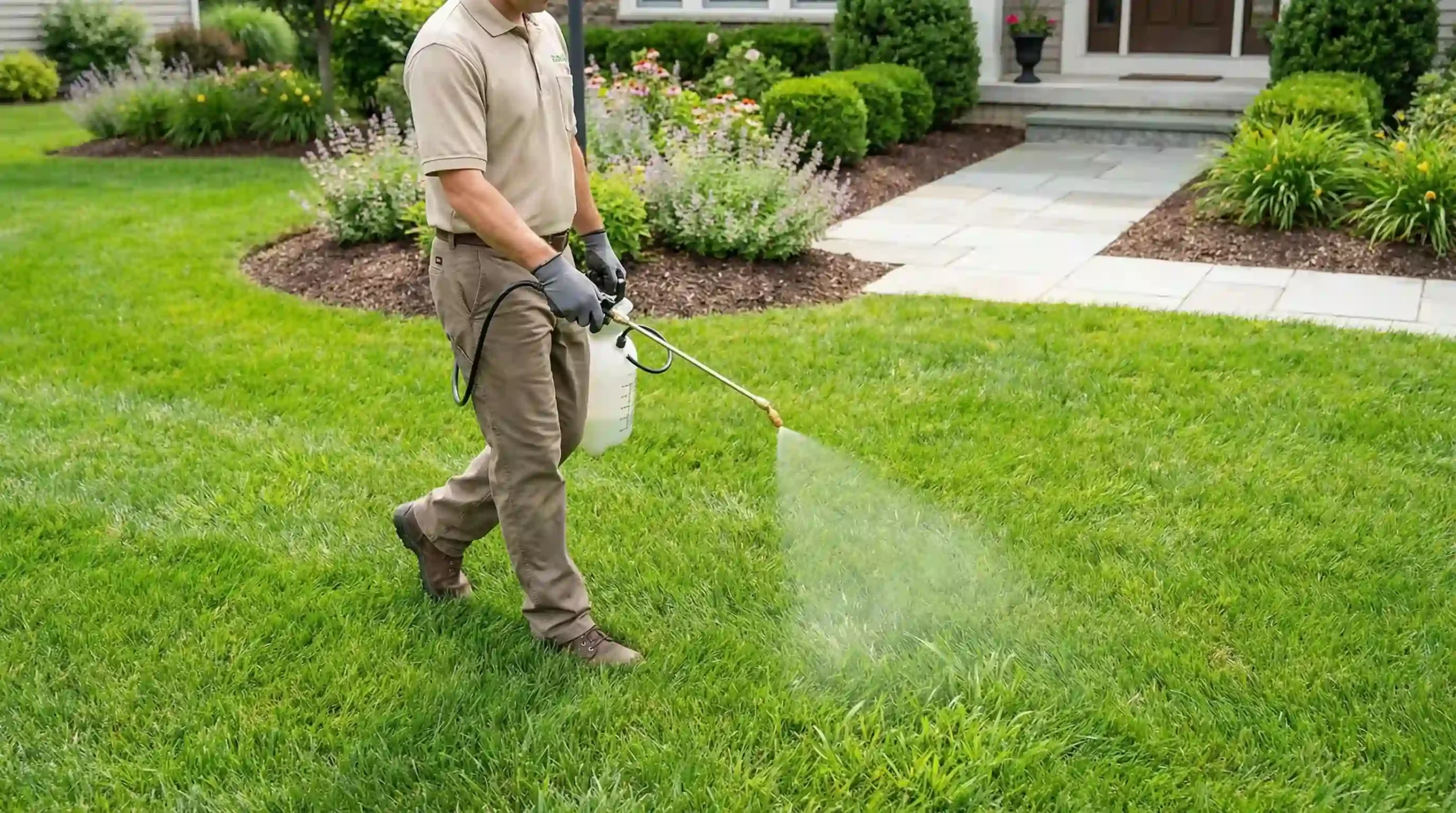
Effective weed control in Lubbock requires two separate treatments timed to different seasons. Pre-emergent herbicide applied in late February to early March stops summer weeds like crabgrass, goatheads (puncturevine), and field bindweed before they germinate in warming soil. A second pre-emergent application in late September targets cool-season weeds including henbit and annual bluegrass that establish during Lubbock winters. Post-emergent treatments eliminate broadleaf and grassy weeds that appear between those treatment windows.
Nutsedge requires separate targeted treatment, as standard broadleaf herbicides do not control it effectively. A thick, correctly fertilized Bermuda lawn also acts as a long-term weed barrier on its own, since dense turf prevents weed seeds from reaching soil. Combined, these treatments keep your lawn clean and competitive through the full growing season.
Aeration, Topdressing & Soil Improvement
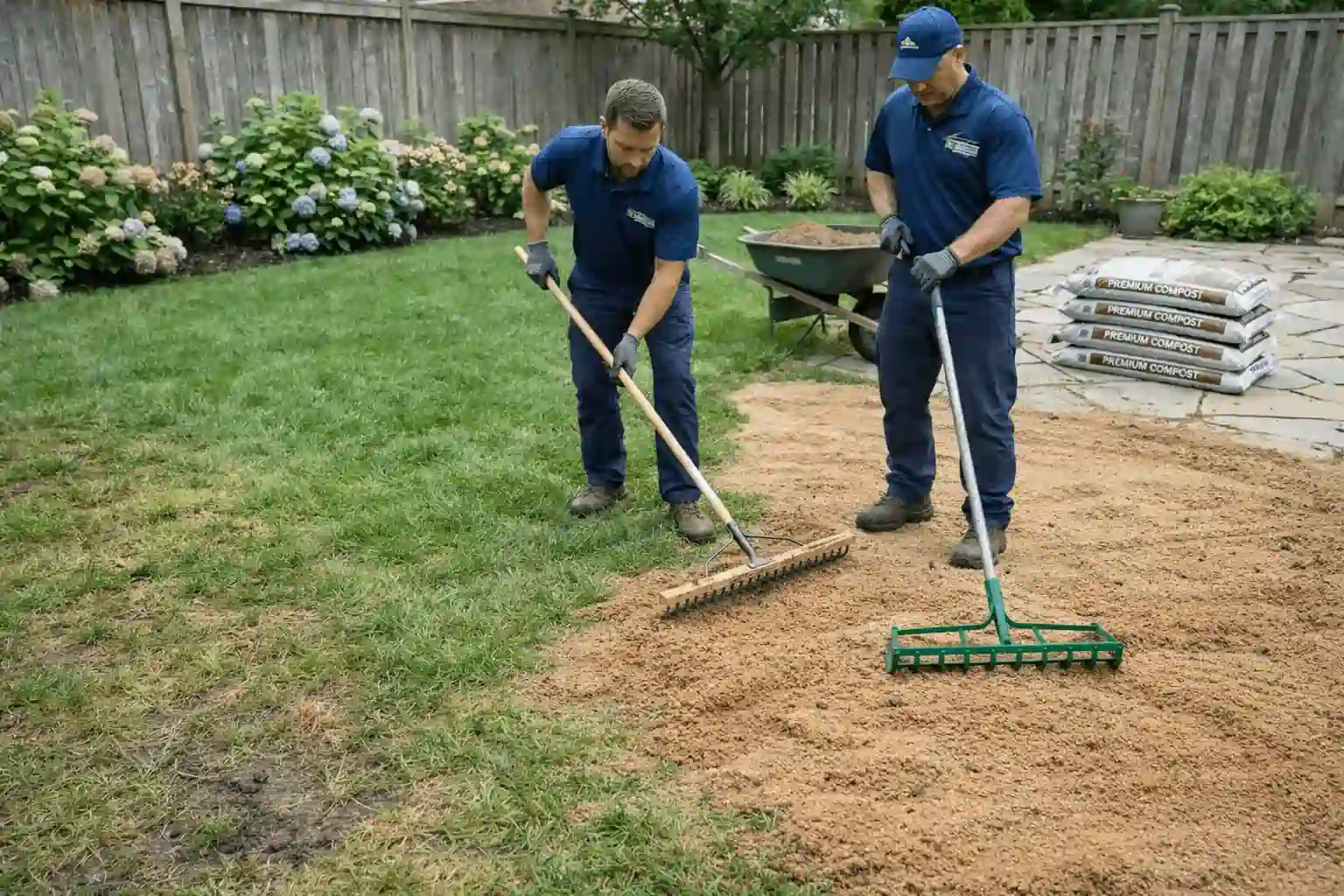
Caliche soil compacts over time and restricts both water movement and root development. Aeration pulls plugs from the turf, opening channels for water, fertilizer, and air to reach the root zone more effectively. In Lubbock, aeration is best performed in late spring or early summer when Bermuda is actively growing and can recover quickly by filling in the plug holes within two to three weeks. Compacted caliche is one of the main reasons fertilizer and weed control treatments underperform — the products reach the surface but cannot penetrate to where they would do the most good. Aeration is also a useful preparation step before overseeding or before a new landscaping project where improving soil condition benefits the new plants.
Fertilization & Nutrient Management
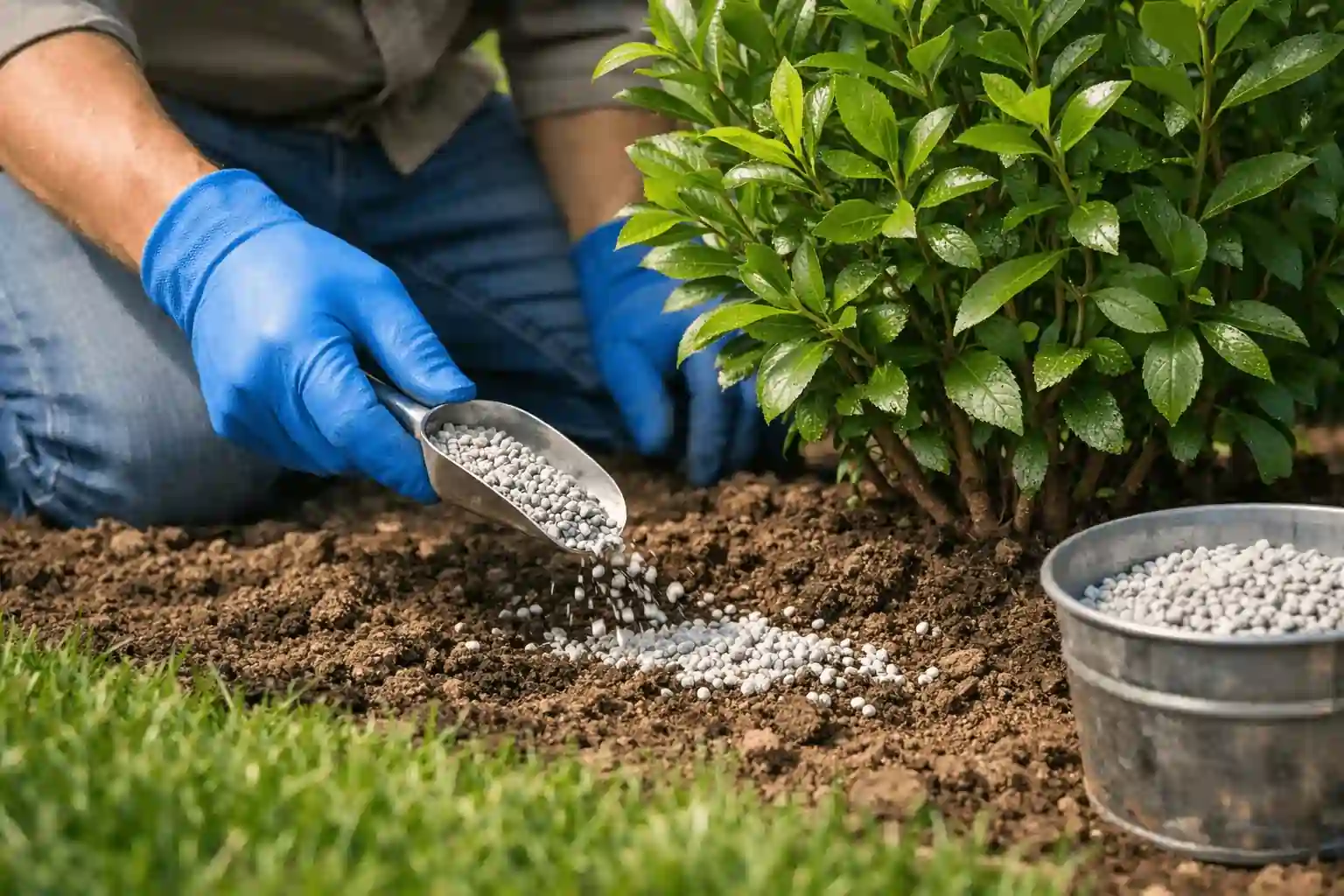
Bermuda grass in Lubbock needs nitrogen applied after it breaks dormancy in late spring, not before. Early application feeds weeds and risks burning turf that is not yet actively growing. We apply a balanced fertilizer program across three to four applications timed to Lubbock’s specific growing season: a starter application once the lawn is actively green, follow-up applications during peak summer growth, and a final potassium-heavy application in early fall to harden roots before dormancy. Fertilization results depend heavily on how well water is being delivered to the root zone. A properly functioning sprinkler system helps fertilizer treatments reach where they need to go rather than running off the surface.
Pest & Insect Control
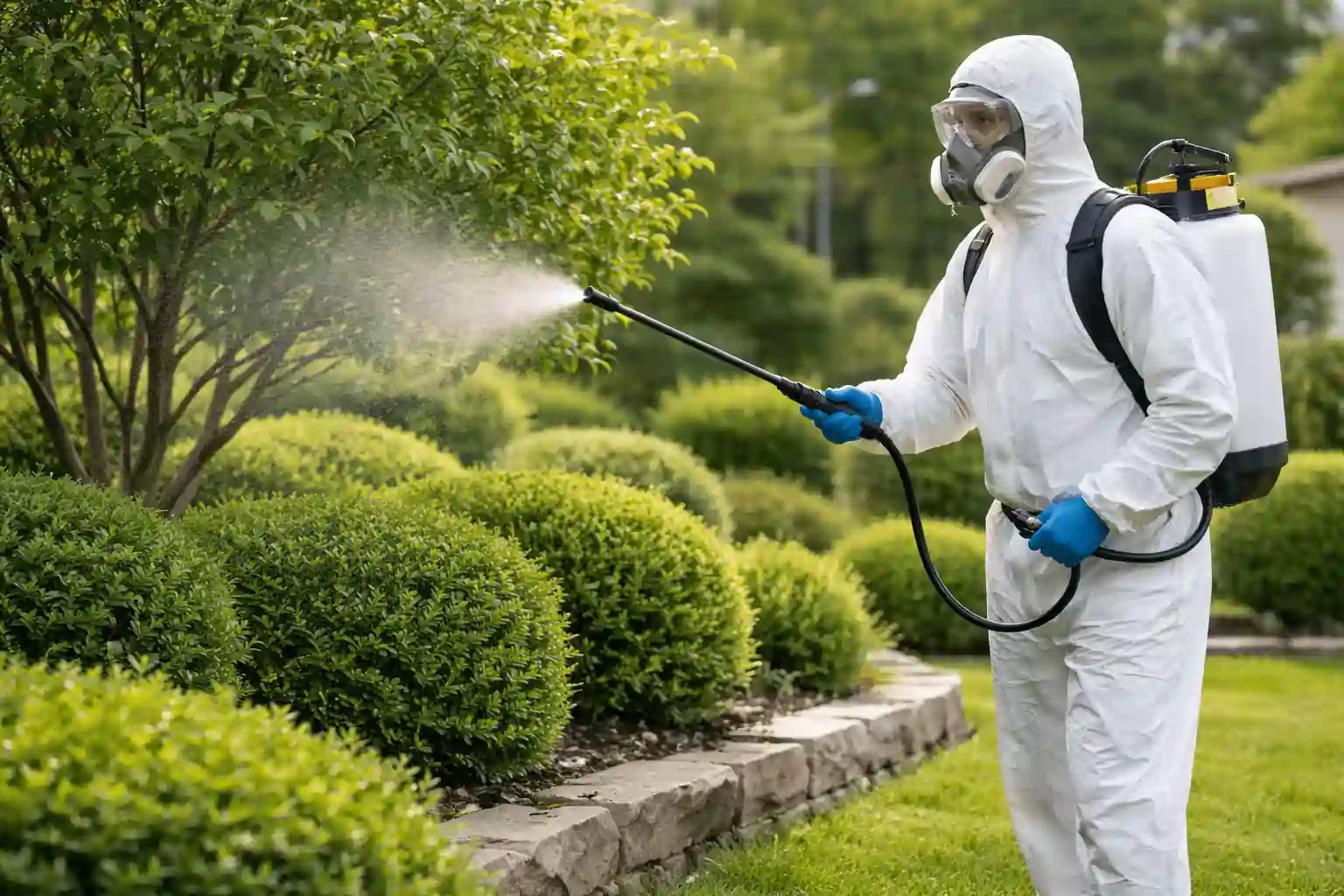
The most damaging lawn pests in Lubbock Bermuda grass follow predictable seasonal patterns, which allows us to time treatments when pest pressure is actually peaking. Chinch bugs are most active July through August during hot, dry stretches, feeding at the thatch layer and creating expanding brown patches in full-sun areas that do not improve with irrigation. Fall armyworms arrive in August and September and can cause visible lawn damage within 48 hours of infestation. Identifying them early is critical because large visible patches typically appear after the feeding wave has already moved through most of the yard.
We also treat for white grubs, which feed on grass roots below the surface and cause sections that pull free from soil with no root attached. Fire ant mound treatment keeps colonies from damaging turf and creating hazards in yard areas used daily. Flea and tick applications are available as add-on treatments for households where outdoor activity makes surface pest management a priority.
Disease & Fungus Control
Lawn disease in Lubbock Bermuda is most active when nighttime temperatures stay above 70°F and the lawn surface stays wet after evening irrigation, typically late June through August. Brown patch (Rhizoctonia solani) is the most common summer disease here, appearing as circular tan patches with a slightly darker ring at the outer edge. Dollar spot produces smaller straw-colored spots roughly the size of a silver dollar and is most active in late spring and fall when nitrogen levels are low and surface moisture is high. Helminthosporium leaf spot causes tan lesions with dark borders on individual grass blades and spreads most aggressively during cool, wet Lubbock springs.
Preventive fungicide applications work best when applied before conditions become ideal for disease, not after patches are already visible and spreading. Irrigation timing is the most controllable prevention factor: watering in early morning rather than evening eliminates the prolonged surface moisture that fungal diseases require to establish. We assess actual conditions before recommending any treatment rather than applying fungicide on a fixed schedule regardless of disease pressure.
Seasonal & Specialized Care
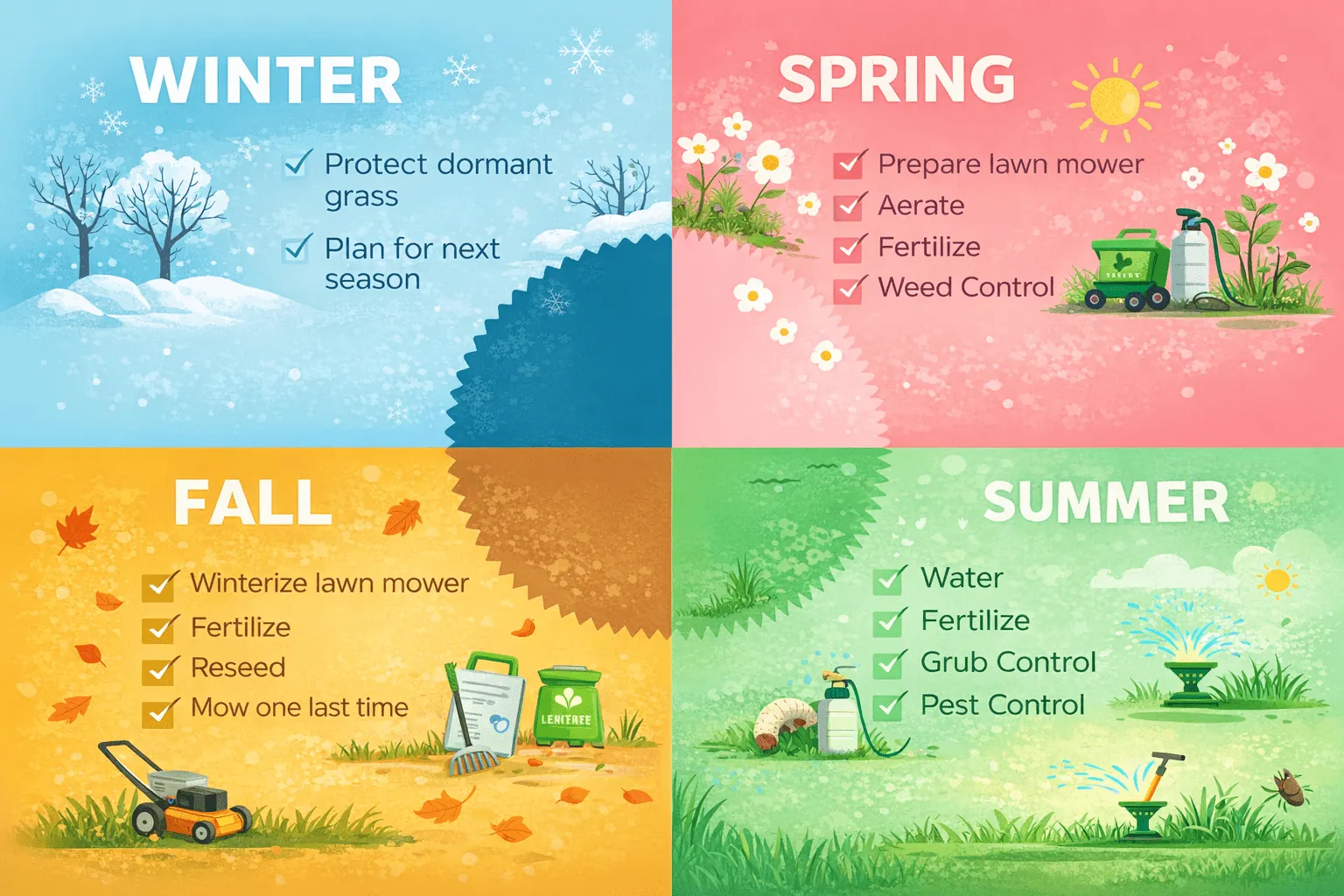
Lubbock’s Bermuda lawns require different care at each point in the year, and a single program without seasonal adjustment produces consistently mediocre results. Spring work covers pre-emergent herbicide application before soil hits 55°F, scalping to remove dormant thatch buildup, and the first fertilization once soil temperatures consistently reach 65°F. Summer shifts to weekly mowing, active pest monitoring for chinch bugs and armyworms, fungal disease watch during warm nights, and irrigation scheduling that complies with Lubbock’s address-based watering ordinance from April through September.
Fall work includes core aeration for compacted lawns, the final fertilization by early September, fall pre-emergent for cool-season weeds, and reducing mowing frequency as Bermuda slows into dormancy. Winter is the planning and soil testing season: no mowing, no nitrogen, and no aeration on dormant Bermuda, but the right window to address pH issues and schedule spring projects before the growing season begins.
What Does Lawn Care Cost in Lubbock, TX?
Lawn care costs in Lubbock vary by service type, property size, and how frequently you schedule visits. Recurring mowing for a standard residential lot typically starts at $40 to $80 per visit. Properties larger than half an acre or with significant edging along driveways, beds, and fencing run toward the higher end of that range.
Fertilization applications are typically priced per treatment, with most Lubbock residential lawns requiring three to four per growing season. Weed control, aeration, and pest treatments are quoted separately based on lawn size and the severity of the issue at the time of assessment. Full-season recurring programs that bundle mowing, weed control, and fertilization on a scheduled basis cost less per individual service than booking each treatment separately.
Every property at Ace is quoted on-site before work begins. You receive a written estimate with itemized pricing, not a phone ballpark followed by a higher invoice.
Our Lawn Care Process in Lubbock
Step 1 : Contact and quote request – Call (806) 230-9098 or fill out the quote form. We ask about your property size, grass type, current lawn condition, and what services you need. For most residential properties, a site visit is scheduled within the week.
Step 2 : On-site assessment – We walk the yard and check soil compaction, thatch depth, irrigation coverage, existing weed and pest pressure, and any visible disease or brown patch patterns. This tells us what the lawn actually needs rather than what a standard program assumes it needs.
Step 3 : Written plan and schedule – You receive a written service plan with treatments, timing, and pricing. Recurring programs come with a seasonal schedule showing when each treatment is applied and why. No vague descriptions or open-ended commitments.
Step 4 : Ongoing service and monitoring – We show up on the agreed schedule. During each visit we also check for new issues: pest activity, fungal conditions, irrigation problems, or coverage gaps. Anything that warrants attention gets flagged to you before the next visit, not after the damage is already visible.
Areas We Serve for Lawn Care in Lubbock, TX
We provide lawn care across Lubbock and the surrounding South Plains region. Every area we serve shares the same caliche soil, Bermuda grass, and West Texas heat — so the same Lubbock-specific approach applies regardless of which community your property is in.
Lubbock — Our home base. We service established neighborhoods, newer developments on the city’s south and west edges, and commercial properties throughout the city.
Wolfforth — One of the fastest-growing suburbs in the region. Many properties here are newer construction with recently laid sod that needs a consistent early care program to develop a strong root system.
Shallowater — A smaller community northwest of Lubbock where we serve residential properties and rural lots with larger lawn areas than typical city parcels.
Plainview — We cover the full 44-mile stretch north. Plainview lawns face the same wind and caliche challenges as Lubbock with slightly cooler temperatures that affect the Bermuda dormancy and green-up window.
Levelland — About 30 miles west of Lubbock. We serve residential and commercial properties on a schedule matched to the same West Texas growing season.
Slaton — Southeast of Lubbock in Lubbock County. We run the same Bermuda-focused, caliche-adjusted lawn care program here as the rest of our service area.
Idalou — A close-in community east of Lubbock. Proximity means we can fit Idalou stops efficiently into our weekly routes without extended travel time.
Abernathy — We serve residential properties in Abernathy on a scheduled basis, applying the same Bermuda-focused program used across all South Plains locations.
Littlefield — Northwest of Lubbock in Lamb County. We apply the same caliche-adjusted lawn care program used across the South Plains.
Brownfield — South of Lubbock in Terry County. Same soil conditions, same grass types, same seasonal windows as the rest of our service area.
Lamesa — Dawson County seat about 61 miles south of Lubbock. We apply the same caliche-adjusted, well-water-aware lawn care program used across the South Plains.
Seminole — Gaines County seat southwest of Lubbock. Same caliche-adjusted, well-water-aware lawn care approach used across the South Plains.
Post — Garza County seat southeast of Lubbock on the Caprock. We run the same Bermuda-focused, caliche-adjusted program here as the rest of our service area.
Muleshoe — Bailey County seat northwest of Lubbock. We serve residential and commercial properties on the same seasonal schedule used across the South Plains.
Why People Choose Ace Landscaping for Lawn Care in Lubbock
Lubbock has no shortage of lawn care companies. Most run the same schedule on every yard regardless of grass type, soil condition, or what the lawn actually needs that week. Here is what we do differently:
We work around Bermuda’s actual growth cycle. Treatments are timed to Lubbock’s season, not a generic Texas calendar. Pre-emergent goes down before the weed window opens. Fertilizer goes on after the lawn breaks dormancy, not before. Aeration happens when Bermuda can recover quickly.
We show up on schedule. Skipping a mow during peak Bermuda growth season is not just cosmetic — it sets the lawn back and opens the turf to weed pressure. We run a fixed schedule and do not push visits.
We know caliche soil. Most out-of-market programs are not designed around soil that does not absorb water or fertilizer the way normal topsoil does. We adjust product selection, application rates, and timing based on actual Lubbock soil conditions.
No package upselling. We assess your lawn on the first visit and recommend only what it needs. A healthy lawn in a good area does not need the same program as a struggling one on compacted caliche with poor irrigation coverage.
One team, full yard. If a lawn issue turns out to be a drainage problem or a failing irrigation zone rather than a care problem, we handle both — no referrals to a second contractor who has never seen your property.
Frequently Asked Questions
Related Services
Every part of your greenery is handled to improve its appearance and health.