Getting Rid of Grassburs, Goose Grass and Goatheads
Grassburs, goatheads, and goose grass are three different South Plains lawn weeds that get lumped together because they all show up in the same thin, stressed turf. Grassbur, botanically Cenchrus spinifex, is a grass that produces its own spiky seed cluster. Goathead, or puncturevine, is Tribulus terrestris, a low broadleaf vine with a completely different growth habit and seed structure. Goose grass, Eleusine indica, is a third and distinct grassy weed that spreads flat in a wagon-wheel pattern with a whitish center. Homeowners often use these names interchangeably, but correct identification matters because the herbicide that controls one does not always control the other two at the same rate.
Grassburs, Goatheads and Goose Grass Thrive Wherever South Plains Lawns Run Thin
Grassbur grows as a grass, blending into a lawn until it seeds out and produces the barbed burs most South Plains homeowners recognize immediately underfoot. It is a summer annual, so each plant germinates, produces its burs, and dies within a single growing season, leaving those burs in the soil to start the cycle again the following spring.
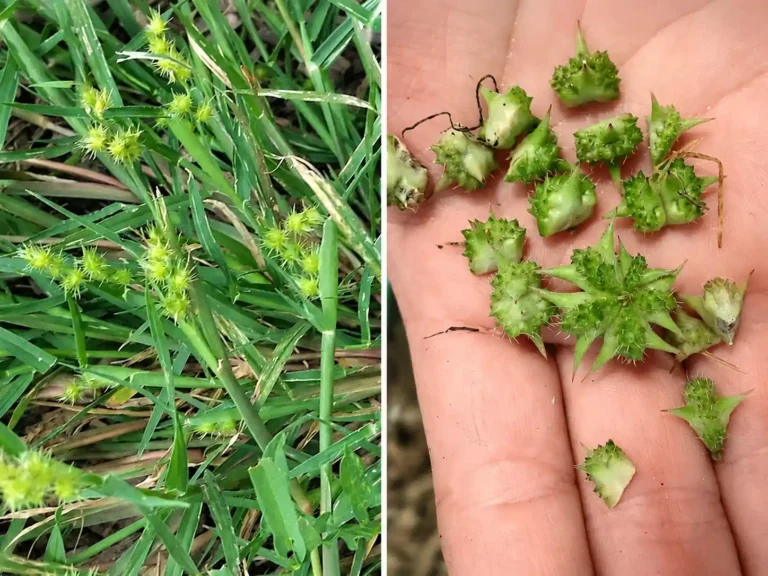
Goathead grows low and flat, closer to a vine than a grass, with small yellow flowers before it produces its own hard, spiked seed pods. It tolerates poor, compacted soil and heat better than most turfgrass, which is exactly why it establishes in the same stressed, thin areas grassbur favors.
None of the three compete well against thick, healthy turf, though each favors slightly different stress. Grassbur and goathead need open soil or a thin, weakened stand to germinate, which is why they concentrate along driveway edges, in compacted foot-traffic paths, and in areas already thinned by heat stress or uneven irrigation coverage. We see this pattern on properties across Levelland, Plainview, Slaton, and Seminole, wherever caliche or sandy soil combines with compacted foot traffic to keep turf too thin to shade out any of the three.
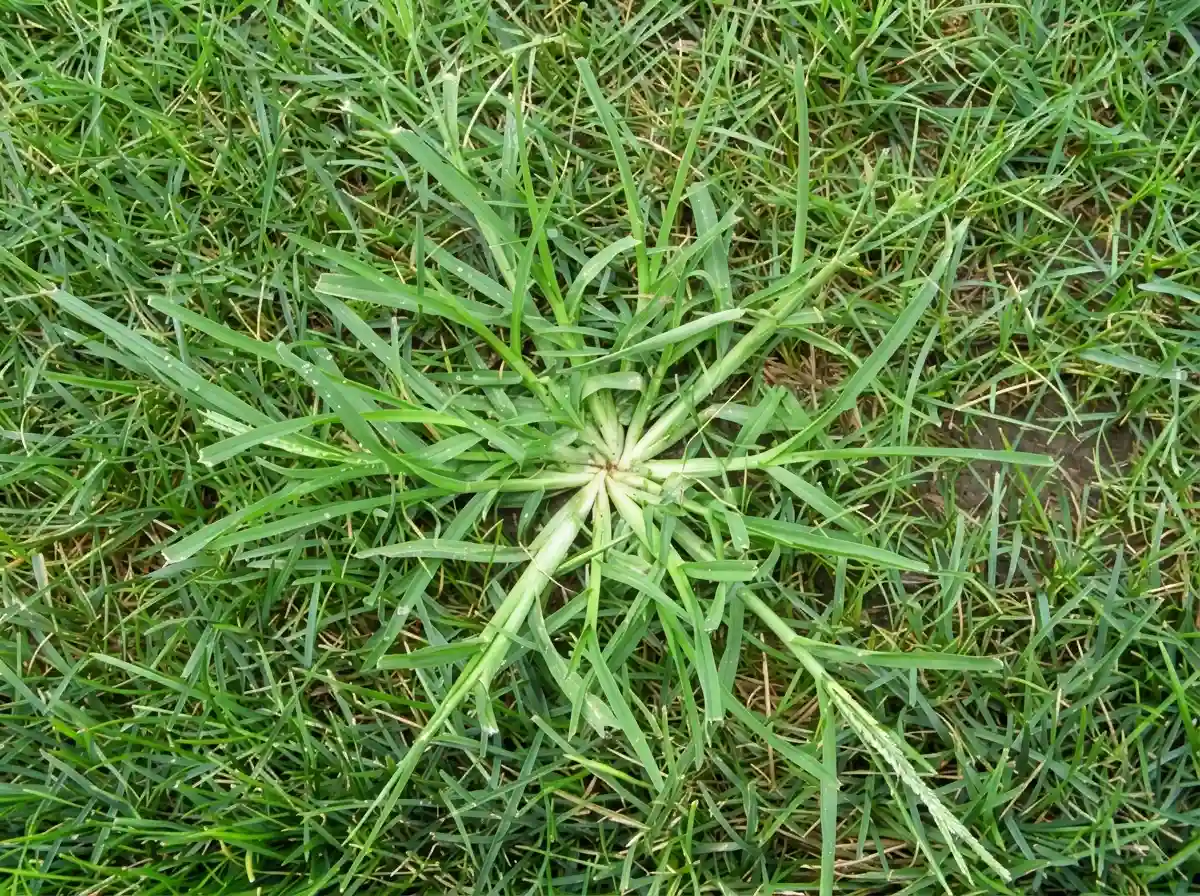
Goose grass looks different from both. It grows as a flattened rosette with a wagon-wheel shape and a whitish to silvery center, and unlike crabgrass it does not root at the nodes where its stems touch the ground. Its seed head splits into 3 to 8 finger-like spikes radiating from a single point, a shape that stands out once you know to look for it. Goose grass germinates when soil temperatures reach 60 to 65 degrees, roughly two weeks behind grassbur and goathead, and it takes hold specifically where soil is compacted and mowing has been cut too short, according to university turf research from NC State Extension and the University of Maryland Extension. That is a different trigger than grassbur or goathead: it is compaction and mowing height driving it, not just bare soil.
This means a yard where grassburs, goatheads, or goose grass return year after year is usually pointing to an underlying turf density or soil compaction problem, not simply a weed problem. Treating the weed without fixing why that patch stays thin or compacted generally means the same spot reseeds itself the following year regardless of herbicide applied.
How Ace Landscaping Kills and Stops Grassburs, Goose Grass and Goatheads?
A pre-emergent herbicide containing pendimethalin, dithiopyr, prodiamine, or indaziflam, applied before soil temperatures reach the 52-degree mark where grassbur germination begins, blocks grassbur and goathead seeds before they sprout. Peak emergence for those two hits once soil warms into the low 70s each spring, according to Texas A&M AgriLife Extension. Goose grass runs on a later clock, germinating once soil reaches 60 to 65 degrees, so a single early-spring application can lose its residual before goose grass finishes coming up. A second, split application of the same product roughly 8 to 10 weeks after the first closes that gap and is the difference between a lawn that stays clear all season and one that breaks out in goose grass by mid-summer.
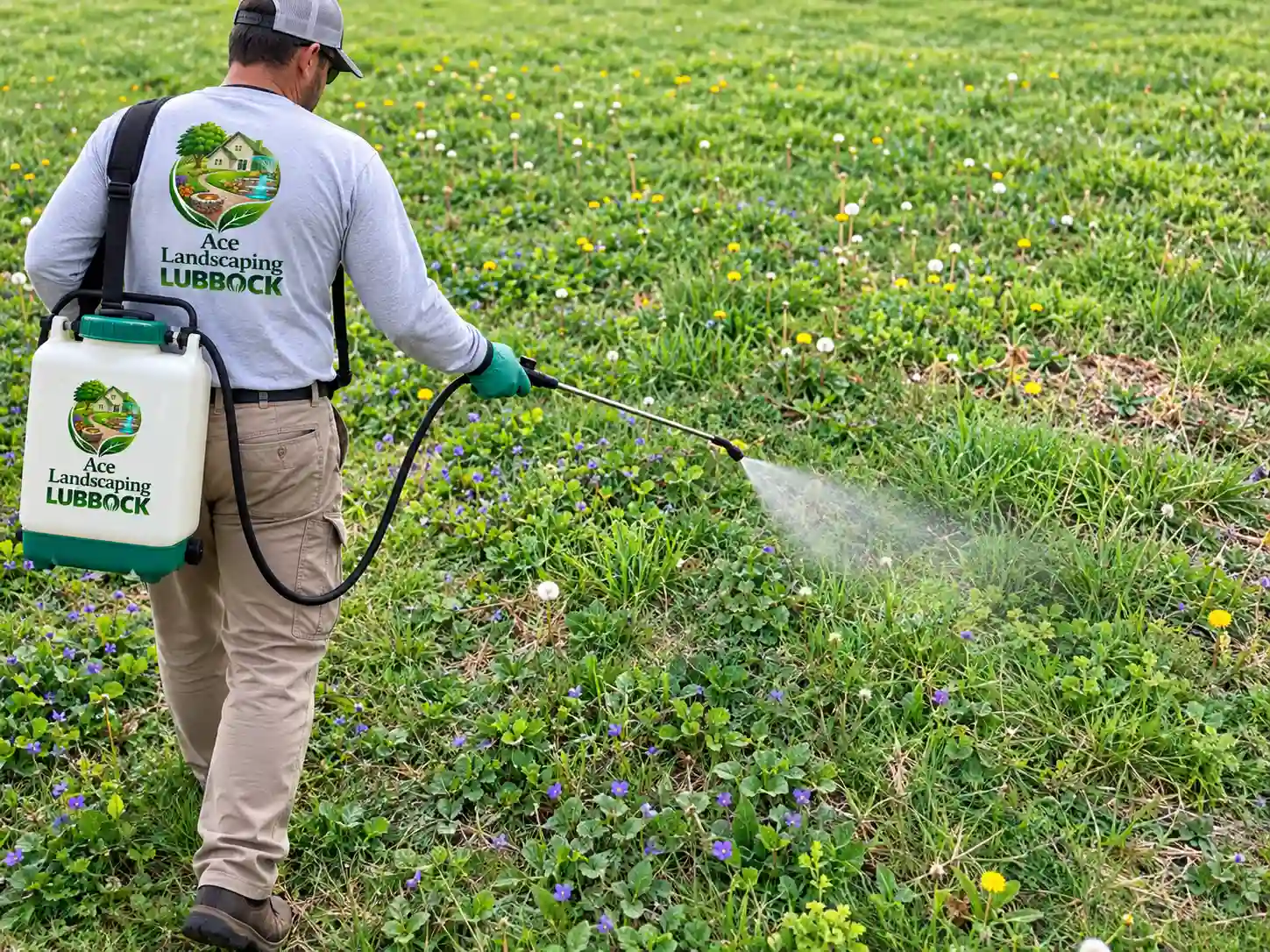
Established plants need a different follow-up, and goose grass is the hardest of the three to clean up after it has already sprouted. Grassbur is a grass, so it needs a grass-specific post-emergent such as one containing imazaquin, while goathead is a broadleaf and responds to a broadleaf herbicide instead, which is why treating both with the same product usually leaves one uncontrolled. Goose grass calls for a product containing quinclorac or fenoxaprop-p-ethyl applied while the plant is still young, since its tough, fibrous root system resists hand-pulling once mature, and resistant populations to some post-emergent products have already been documented in other parts of the country, which is one more reason getting the pre-emergent window right matters more for goose grass than for grassbur or goathead. Hand-pulling grassbur or goathead works for isolated plants before they set seed, pulling sideways rather than straight up so the taproot comes with it, but seed already in the soil can stay viable for years, up to eight for grassbur and four to five for goathead, so pulling alone will not clear an established patch of any of the three.
Thickening the turf through proper mowing height, fertilization timing, aerating compacted areas, and correcting bare-spot irrigation coverage through our lawn care program is what actually closes off the open, compacted ground all three weeds depend on long term.
Frequently Asked Questions
If grassburs, goose grass, or goatheads keep coming back in the same spots, contact Ace Landscaping to build a pre-emergent schedule and address the thin or compacted turf underneath.